Stepping into Lima's historic center feels like crossing a threshold into a world where time operates on a different scale. The cacophony of modern traffic seems to recede, replaced by the rhythmic clip-clop of a policeman's horse on cobblestones and the distant murmur of a guided tour. This is a city layered with history, a UNESCO World Heritage site where the grandeur of Spain's colonial empire is etched into every ornate balcony and sprawling plaza. Yet, beneath the sun-bleached yellow of the cathedral and the intricate woodwork of the balconies, there lies another, deeper layer—a silent, subterranean world that tells a more somber tale. A walk from the bustling heart of the Plaza de Armas to the haunting depths of the Catacombs of the San Francisco Monastery is not merely a stroll through streets; it is a journey from the zenith of colonial power to the profound, earthy reality of mortality that underpinned it all.
The Plaza de Armas, or Plaza Mayor as it was originally known, is the undeniable nucleus of old Lima. Founded by Francisco Pizarro in 1535, the square was designed as the ultimate symbol of Spanish conquest and order in the New World. Every building facing the plaza was intended to project authority—divine, royal, and municipal. Today, the square is a vibrant, often chaotic, tableau of life. Locals and tourists crisscross the paths under the shade of ficus trees, while the central bronze fountain, a replacement from the 17th century, provides a constant, gentle splash. The air is thick with the scent of roasted corn from street vendors and the exhaust of countless cars circling the perimeter. But to understand the square's true significance, one must look past the contemporary bustle and upward, to the architectural chorus lining its sides.
On the north side stands the Government Palace, a majestic, baroque-style complex painted in a brilliant cream and gold. This is the seat of Peruvian presidential power, built directly over the location of Pizarro's own house. The ceremonial changing of the guard, with its polished boots and stirring brass band, is a daily reminder of the continuity of authority that began here. Directly opposite, on the east side, is the Archbishop's Palace, its stunning neo-colonial facade featuring exquisite wooden balconies—a signature Limeño architectural element. These balconies, or balcones, are more than decorative; they were a means for the colonial elite, particularly women, to observe the life of the square without being seen themselves, a silent testament to the social hierarchies of the era.
But it is the Cathedral of Lima, dominating the east side of the plaza, that truly anchors the square spiritually. Its twin towers and severe, baroque facade speak of a solemn and unwavering faith. Inside, the cool, dim silence is a world away from the square's sunshine and noise. The air is heavy with the scent of old wood and incense. Marble floors lead the eye down the vast nave towards the ornate, gold-leaf-covered altarpiece. Here, in a modest chapel, lies the alleged tomb of Francisco Pizarro himself. It is a poignant reminder that the conqueror who founded this city of God and king ultimately met his own end in a bloody assassination not far from here. The cathedral is a masterpiece of colonial art and architecture, but it is also a mausoleum, setting the stage for the theme of life and death that defines this walk.
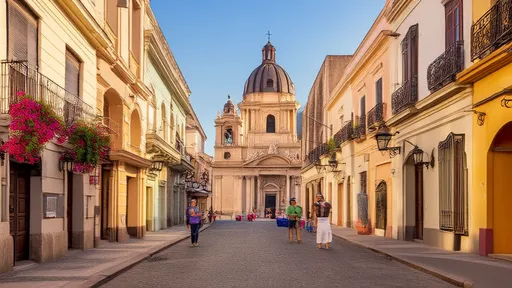
Leaving the Plaza de Armas behind, one wanders north along the pedestrianized Jirón de la Unión, a street that once connected the political heart of the city with the commercial and religious district of San Francisco. The architecture here is a captivating mix of decaying colonial splendor and early 20th-century republican optimism. Elegant boutiques occupy ground floors, while above, the iconic wooden balconies—some painted in bright blues and greens, others weathered to a silvery gray—lean out over the street like attentive spectators. The sound changes from the open echo of the plaza to the enclosed chatter of cafes and the footsteps of shoppers. This street was the social promenade of Lima's aristocracy for centuries, and even today, it pulses with a confident, urban energy.
A gradual turn onto Jirón Áncash leads the visitor away from the commercial glitter and into a noticeably quieter, more contemplative atmosphere. The buildings seem to grow older, their walls bearing the patina of centuries of coastal fog. And then, it appears: the immense, mustard-yellow complex of the Convent of San Francisco and its iconic basilica. The facade is a stunning example of Spanish Baroque, a masterwork in carved stone, but its true marvel is the dome, a magnificent structure built entirely of Nicaraguan mahogany and resistant to the earthquakes that have frequently devastated the city. This architectural resilience is the first clue that this place holds secrets of a deeper, more enduring nature.
The interior of the basilica is a breathtaking spectacle of Moorish-inspired artistry. The main cloister is a serene oasis, its archways lined with vibrant, century-old tiles from Seville depicting the life of Saint Francis of Assisi. The library is a place of hushed reverence, housing thousands of antique volumes, including some printed within decades of Gutenberg's press. Yet, for all its above-ground beauty, the monastery's most profound draw lies beneath the feet of its visitors. A narrow, stone staircase descends into the earth, into a cool, damp darkness that smells distinctly of old soil and time. This is the entrance to the catacombs.
The catacombs of San Francisco were Lima's first cemetery, used throughout the colonial period until the city opened a general cemetery in 1808. It is estimated that up to 25,000 people were laid to rest here. The experience underground is visceral and unforgettable. The low, vaulted brick ceilings create a sense of intimate enclosure. The bones are not scattered haphazardly but were, in a practice both practical and strangely respectful, organized into precise, geometric patterns when the cemetery was rediscovered in the mid-20th century. Deep circular pits, or osarios, are filled femurs and skulls arranged in concentric circles, like macabre works of art. These were functional solutions for managing space, but they also reflect a colonial-era Catholic worldview that saw death not as an end, but as a temporary state before resurrection.
Standing in the silent, dimly lit chambers, the weight of history is palpable. This was the great equalizer. Here, the bones of Spanish viceroys, wealthy merchants, and common citizens intermingled. The distinctions of race, class, and wealth so rigidly enforced in the sunlit world above were utterly dissolved in this subterranean domain. The catacombs are a silent, powerful testament to the scale of colonial Lima's population and the ever-present shadow of mortality in an age before modern medicine. The journey from the Plaza de Armas—a stage set for power, faith, and commerce—ends in a quiet confrontation with the fundamental human condition that underpinned it all.
Emerging back into the bright Lima sunlight, the city feels different. The yellow of the monastery walls seems brighter, the sounds of the street more vivid. The walk from the Plaza de Armas to the Catacombs of San Francisco is more than a tourist itinerary; it is a narrative arc through the soul of colonial Lima. It moves from the public proclamation of power and faith to the private, intimate encounter with mortality. It connects the soaring ambitions of conquerors and clerics with the silent, dusty reality of the thousands who lived, died, and built their world. To walk this path is to understand that the history of this city is not just written in stone on the surface, but is also etched in bone deep below, a reminder that every great civilization is built upon a foundation as humble and universal as the earth itself.
By /Sep 28, 2025
By /Sep 28, 2025
By /Sep 28, 2025
By /Sep 28, 2025

By /Sep 28, 2025

By /Sep 28, 2025
By /Sep 28, 2025
By /Sep 28, 2025
By /Sep 28, 2025
By /Sep 28, 2025
By /Sep 28, 2025
By /Sep 28, 2025
By /Sep 28, 2025

By /Sep 28, 2025
By /Sep 28, 2025
By /Sep 28, 2025

By /Sep 28, 2025
By /Sep 28, 2025

By /Sep 28, 2025

By /Sep 28, 2025