Deep in the heart of the Peruvian Amazon, accessible only by river or air, lies Iquitos, the world's largest city unreachable by road. This sprawling metropolis serves as the primary gateway to the northern Amazon basin, a pulsating hub of humidity, history, and the haunting calls of the jungle that presses in on all sides. It is from here that the most profound adventures begin, journeys that lead away from the city's bustling mototaxi-filled streets and into the primordial embrace of the rainforest, towards encounters with ancient cultures and the mysterious nocturnal world that awakens after sunset.
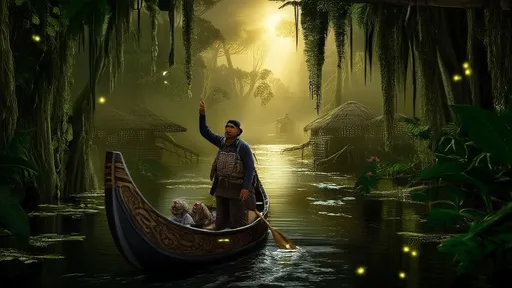
The journey itself is a transition from the known to the unknown. Boarding a boat on the mighty Amazon River, or one of its massive tributaries like the Napo or the Itaya, is to leave the 21st century behind. The city's noise fades, replaced by the chugging of the boat's engine and the symphony of the jungle. The river, a vast, coffee-colored expanse, is the lifeblood of the region, a highway for everything from massive cargo ships to dugout canoes piloted by skilled river people. As you travel deeper, the settlements become sparser, the forest taller and denser, a solid wall of green stretching to the horizon. The air grows thicker, heavy with the scent of damp earth, blooming flowers, and decay—the essential cycle of the rainforest made palpable.
After hours on the water, a small, inconspicuous landing point appears, marking the entrance to the territory of one of the Amazon's indigenous communities. The term primitive tribe is a misnomer, carrying connotations of simplicity that are entirely inaccurate. These are communities with complex social structures, profound spiritual beliefs, and an encyclopedic knowledge of their environment that has been passed down through countless generations. The visit is not a trip to a human zoo; it is a privileged invitation into a living culture, an opportunity for cultural exchange that must be approached with the utmost respect and humility.
Stepping onto the soft, leaf-littered ground of the village is a sensory experience unlike any other. The community, often comprising large, open-sided malocas (communal houses) and smaller family dwellings, is integrated seamlessly into the forest. The villagers, with their distinctive facial paintings made from genipa fruit or annatto seeds, greet visitors with a quiet curiosity. Through a translator, often a community member who has learned Spanish, stories are shared. They speak of their relationship with the forest, which they do not see as a resource to be exploited but as a living entity, a provider and protector. They explain the uses of various plants—for food, for medicine, for building materials, for spiritual ceremonies. A walk through their gardens, a form of agroforestry that mimics the jungle's biodiversity, reveals an incredible depth of botanical knowledge.
Perhaps the most captivating aspect of the visit is witnessing the preservation of ancient crafts. Skilled artisans demonstrate the intricate process of making blow darts, from selecting the right cane to fletching the dart with kapok fiber. Women weave stunningly beautiful textiles from palm fibers, using natural dyes derived from leaves, clay, and tree bark to create geometric patterns that tell stories of their cosmology and history. These are not souvenirs; they are cultural artifacts, and their creation is a testament to a resilience that has withstood centuries of external pressure.
As the sun begins its rapid descent towards the treetops, painting the sky in shades of orange and purple, the atmosphere in the jungle shifts palpably. The diurnal creatures retreat, and a new cast of characters prepares to take the stage. The transition from day to night in the Amazon is a dramatic, almost theatrical event. This is the prelude to the second profound experience: the night walk. Armed with nothing but headlamps and a keen sense of anticipation, visitors follow a local guide back into the forest, now a realm of deep shadows and amplified sounds.
The beam of a flashlight cuts through the absolute darkness, revealing a world that is hidden by day. The rainforest at night is an entirely different ecosystem. Your guide, whose eyes seem to be equipped with night vision, points out creatures you would never have noticed. A stick insect, perfectly camouflaged, becomes visible only when it takes a hesitant step. The reflective eyes of a wolf spider glitter like tiny diamonds from a hole in the ground. Tree frogs, no bigger than a thumbnail, display vibrant warning colors of red and blue, their sticky feet clinging to broad leaves.
Every sense is heightened. The chorus of insects is deafening, a pulsating, electric hum that forms the baseline of the jungle's nighttime soundtrack. This is punctuated by the sporadic, deep-throated croak of a bullfrog, the eerie screech of a night monkey, or the distant, haunting call of a potoo bird. The air feels cooler, and the complex fragrances of blooming night flowers, like the sweet, intoxicating scent of the Datura, mix with the earthy smell of the forest floor. The guide explains the nocturnal hunt—the strategies of predators like tarantulas waiting at the edge of their burrows, and the defenses of their prey. You learn that the faint, greenish glow on a rotting log is bioluminescent fungus, and that the delicate, intricate webs spanning between trees are the traps of nocturnal spiders.
The combination of these two experiences—the cultural immersion by day and the sensory exploration by night—creates a profound understanding of the Amazon. It is impossible to separate the people from the forest or the forest from its nocturnal life. They are all part of an intricate, interdependent whole. The indigenous community's survival is tied to the health of the ecosystem, and the secrets of that ecosystem are fully revealed only under the cover of darkness. The visit to the village teaches respect for human ingenuity and cultural heritage, while the night walk instills a sense of awe for the biodiversity and the raw, untamed power of nature.
Returning to Iquitos after such a journey is a disorienting experience. The city's lights and noise feel abrasive. You carry back with you not just photographs, but the lingering sounds of the jungle, the profound quiet dignity of the people you met, and the humbling realization of how much life, mystery, and wisdom thrives in the heart of the green world, far from the roads and routines of modern life. It is an encounter that changes perspective, a reminder that there are still places on Earth where ancient rhythms prevail and where the boundary between the human world and the wild is beautifully, and necessarily, thin.
By /Sep 28, 2025
By /Sep 28, 2025
By /Sep 28, 2025
By /Sep 28, 2025

By /Sep 28, 2025

By /Sep 28, 2025
By /Sep 28, 2025
By /Sep 28, 2025
By /Sep 28, 2025
By /Sep 28, 2025
By /Sep 28, 2025
By /Sep 28, 2025

By /Sep 28, 2025
By /Sep 28, 2025
By /Sep 28, 2025
By /Sep 28, 2025

By /Sep 28, 2025
By /Sep 28, 2025

By /Sep 28, 2025

By /Sep 28, 2025
