In kitchens across the globe, a quiet revolution is taking place, one clove at a time. For generations, the humble garlic clove has been a cornerstone of flavor, its pungent aroma signaling the start of countless meals. Yet, for all its culinary glory, garlic has always presented a tedious, sticky, and time-consuming challenge: peeling. The act of individually removing the papery skin from each clove has frustrated home cooks and professional chefs alike, often leaving behind the tell-tale scent on fingers for hours. It is a universal kitchen grievance, a small but persistent obstacle in the pursuit of efficient cooking.
Enter the shaking bowl method, a brilliantly simple technique that has surged in popularity through social media and cooking forums. This approach promises to liberate cooks from the monotony of single-clove peeling, offering a way to process an entire head, or even multiple heads, of garlic in mere minutes. The concept is almost deceptively straightforward, causing many to view it with initial skepticism. Can something as simple as shaking two bowls together truly solve a problem that has persisted for so long? The answer, as discovered by a growing number of culinary enthusiasts, is a resounding and triumphant yes.
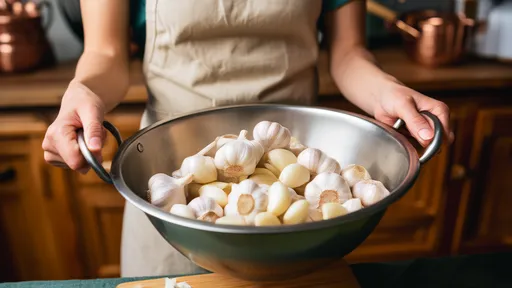
The beauty of the method lies in its minimalistic requirements. You need no specialized gadgets, no single-use kitchen tools destined to clutter a drawer. The primary equipment consists of two metal bowls of the same size. Stainless steel is ideal due to its weight and durability, but any rigid, similarly sized mixing bowls can work. The second, and only other, ingredient is the garlic itself. To begin, you break apart your heads of garlic, separating them into individual cloves. There is no need to trim the ends or make any preliminary cuts; the cloves go into the bottom bowl entirely intact, just as they were pulled from the bulb.
Once the cloves are settled in the first bowl, you invert the second bowl and place it on top, creating a sealed, spherical chamber. The crucial next step is to hold the two rims together firmly. With a good grip established, you begin to shake. And not just a gentle wobble, but a vigorous, assertive, up-and-down shaking motion. The goal is to create a chaotic environment inside the bowls where the cloves are flung violently against the metal walls and, most importantly, against each other. This sustained agitation is the engine of the entire process.
The science behind why this works is a satisfying blend of physics and simple mechanics. The force of the cloves colliding with the hard surface of the bowls and with each other creates friction and impact. This mechanical action effectively bruises and breaks the brittle, papery skin that clings to the garlic clove. The rigid structure of the skin cannot withstand this sustained battering. After just twenty to thirty seconds of energetic shaking, the once-tight skins will have been loosened, shattered, and separated from the firm, juicy cloves within. The transformation is both immediate and remarkably complete.
When you finally stop shaking and lift the top bowl, you are met with a satisfying sight. The bottom bowl will contain a pile of pristine, perfectly peeled garlic cloves, surrounded by a mess of papery debris. In most cases, every single clove will be completely naked, ready for mincing, slicing, or pressing. A few might require a very light tap or a gentle nudge to fully separate from a last stubborn piece of skin, but the hard work is unequivocally done. The efficiency is staggering, turning a five-minute chore into a ten-second task.
This technique is not merely a quirky kitchen hack; it represents a significant shift in culinary efficiency, particularly for those who cook in large volumes. Imagine preparing a recipe that requires forty cloves of garlic, a common occurrence in certain sauces, stews, or roasts. The traditional method would be a daunting, finger-aching prospect. With the shaking bowl method, it becomes a trivial matter. Caterers, meal-prep services, and restaurant line cooks can process pounds of garlic in advance, streamlining their workflow and saving invaluable time during busy service hours. For home cooks hosting a large dinner party, it eliminates a major preparatory bottleneck.
Beyond its raw efficiency, the method also offers a qualitative improvement. Handling garlic cloves individually often leads to bruising and crushing from the pressure of fingernails or knives used to peel them. This can cause the garlic's flavorful oils to be lost on your fingers or the cutting board before they even make it into the pan. By minimizing direct handling, the shaking method preserves the integrity of each clove. They emerge firm, whole, and unblemished, ensuring that their full flavor potential is delivered directly into your dish.
Of course, no technique is entirely without its considerations. The process can be noisy, a percussive clattering that might startle anyone unfamiliar with the kitchen symphony. It is also a somewhat vigorous physical activity, which might not be suitable for individuals with wrist or shoulder concerns, though the shaking time is so brief it rarely poses a problem. The most important consideration is ensuring the bowls are held together tightly to prevent a garlic clove avalanche across the kitchen floor. A firm, secure grip is the only prerequisite for success.
The rise of this technique is a testament to the power of shared knowledge and community problem-solving in the digital age. It did not emerge from a corporate R&D department or a celebrity chef's test kitchen. It was born in home kitchens, perfected through trial and error, and then shared virally through YouTube tutorials, Instagram reels, and cooking blogs. Its adoption is driven by demonstrable results. Once someone tries it and witnesses the magic for themselves, they become a convert and, invariably, an evangelist, eager to share the secret with fellow cooks.
In a world increasingly focused on convenience, it is refreshing to find a solution that is both supremely effective and entirely analog. It requires no electricity, no complex parts, and no financial investment beyond the bowls most cooks already own. It is a triumph of ingenuity over inertia, proving that sometimes the most elegant solutions to persistent problems have been hiding in plain sight all along. It turns a dreaded chore into a moment of minor spectacle and major satisfaction.
So, the next time a recipe calls for more than a clove or two of garlic, resist the instinct to groan. Do not reach for a jar of pre-peeled garlic, which often sacrifices freshness and potency. Instead, reach for your bowls. Embrace the shake. In less than a minute, you will have a mound of perfectly prepared garlic, a testament to a simple idea that has changed the culinary game. It is a small act, but it embodies a larger principle: that with a little creativity, even the most stubborn kitchen challenges can be overcome.
By /Aug 20, 2025
By /Aug 20, 2025
By /Aug 20, 2025
By /Aug 20, 2025
By /Aug 20, 2025
By /Aug 20, 2025
By /Aug 20, 2025
By /Aug 20, 2025
By /Aug 20, 2025
By /Aug 20, 2025
By /Aug 20, 2025
By /Aug 20, 2025
By /Aug 20, 2025
By /Aug 20, 2025
By /Aug 20, 2025
By /Aug 20, 2025
By /Aug 20, 2025
By /Aug 20, 2025
By /Aug 20, 2025
By /Aug 20, 2025