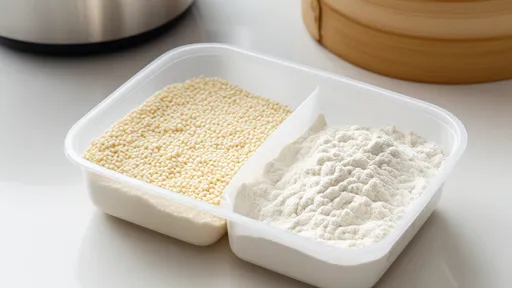
In the world of homemade dumplings, one of the most persistent challenges faced by cooks is preventing delicate dough from sticking to storage containers. Whether preparing for a family feast or meal prepping for the week, ensuring that each dumpling remains intact and easily separable is crucial. The age-old solution to this culinary conundrum involves dusting the dumpling boxes or trays with a dry, powdery substance to create a barrier between the dough and the surface. For generations, home cooks and professional chefs alike have reached for two common pantry staples to serve this purpose: all-purpose wheat flour and cornstarch. While both are white powders that might seem interchangeable to the untrained eye, they possess distinct properties that lead to markedly different outcomes in the practice of dumpling storage.
The choice between these two agents is far from trivial; it can mean the difference between a perfect batch of dumplings, each one free and unfused, and a frustrating clump of dough that tears and ruins the presentation. This isn't just about convenience; it's about preserving the integrity of a carefully crafted food item. The debate between using cornstarch versus flour is a quiet but persistent one in kitchens, often based on tradition, anecdotal evidence, or simply what's available at the moment. However, a deeper dive into the science of these starches and practical, hands-on testing reveals a clear frontrunner for this specific application.
To understand why one works better, we must first look at what these substances are on a fundamental level. All-purpose flour, a kitchen workhorse, is a powder made by grinding wheat grains. Its composition is a complex mix of proteins, primarily gluten, and starch. The gluten is what gives bread its chewy texture and allows dough to become elastic. Cornstarch, on the other hand, is a pure starch extracted from the endosperm of corn kernels. It is virtually pure carbohydrate, containing minimal protein or fat. This fundamental difference in composition is the primary driver behind their contrasting behaviors when used as an anti-sticking agent.
When flour is sprinkled onto a surface, its particles are relatively large and irregular. The protein (gluten) content, while low compared to bread flour, is still present. If moisture from the dumpling wrappers is absorbed by the flour, this gluten can develop a slight pastiness or gumminess. Instead of providing a slick, non-stick barrier, a damp flour coating can sometimes act like a weak glue, especially if the dumplings are stored for more than a few hours or are not frozen immediately. This is the opposite of the desired effect and can lead to the very problem you're trying to avoid.
Cornstarch presents a completely different story. Its particles are much finer and more uniformly shaped, creating a silkier, smoother powder. More importantly, as a pure starch, it is an exceptional moisture absorber. It acts like tiny desiccants, pulling moisture away from the surface of the dumpling wrapper. This creates a much drier interface between the dumpling and the container. Instead of becoming pasty, the cornstarch layer remains powdery and creates a near-frictionless surface that allows the dumplings to slide off effortlessly. It's a principle similar to talcum powder reducing friction on skin.
The superiority of cornstarch becomes undeniable when dealing with freezing. Dumplings are often assembled and then frozen for long-term storage. The freezing process introduces another element: ice crystals. As the moisture in the dumplings freezes, it expands. If the dumplings are stuck to each other or the container, this expansion can fuse them together into a single, unbreakable mass. A layer of cornstarch is exceptionally effective at preventing this. Its moisture-wicking action ensures the surface of the dumpling is as dry as possible before freezing, minimizing the opportunity for ice to form a bond between them. Flour, which can retain moisture, is far more likely to facilitate this icy welding.
Beyond pure functionality, the visual and textural impact on the final cooked product is another consideration. A dumpling dusted with flour and then boiled or steamed may end up with a slightly gummy, cloudy residue on its exterior. This can make the cooking water murky and can leave a faint, pasty film on the dumpling's skin after cooking, slightly affecting its delicate texture. Cornstarch, however, dissolves almost completely in water or steam. A cornstarch-dusted dumpling will cook up clear, with a clean and smooth surface that showcases the filling within. The difference is subtle but noticeable to a discerning palate, preserving the intended mouthfeel of a silky, thin wrapper.
Practical application tips further cement cornstarch's advantage. A light, even dusting is all that is required. It's important not to over-apply, as an excessively thick layer of any powder can leave an undesirable chalky taste. A fine-mesh sieve is the perfect tool for achieving a whisper-thin, uniform coating on the tray and between layers of dumplings. This method is far more effective and less messy than trying to sprinkle it by hand. After a test batch, the proof is in the pudding—or in this case, the potsticker. Dumplings coated with cornstarch will separate with a satisfyingly light tap, each one perfectly formed and ready for the pot.
In conclusion, while all-purpose flour is a versatile and essential ingredient in the dumpling dough itself, its role should end there when it comes to storage preparation. For the specific task of preventing sticking in dumpling boxes, cornstarch is the unequivocally superior choice. Its fine, pure starch composition excels at moisture control, creating a reliably dry and slick barrier that stands up to both refrigeration and freezing. It ensures that the hard work put into folding each dumpling is preserved, resulting in a perfect, restaurant-quality presentation every time. The evidence, both scientific and empirical, points to a simple upgrade for any dumpling enthusiast: retire the flour canister for this job and make space for cornstarch as the dedicated guardian against sticky situations.
By /Aug 20, 2025
By /Aug 20, 2025
By /Aug 20, 2025
By /Aug 20, 2025
By /Aug 20, 2025
By /Aug 20, 2025
By /Aug 20, 2025
By /Aug 20, 2025
By /Aug 20, 2025
By /Aug 20, 2025
By /Aug 20, 2025
By /Aug 20, 2025
By /Aug 20, 2025
By /Aug 20, 2025
By /Aug 20, 2025
By /Aug 20, 2025
By /Aug 20, 2025
By /Aug 20, 2025
By /Aug 20, 2025
By /Aug 20, 2025
