Whipping egg whites to stiff, glossy peaks is a cornerstone technique in the pastry kitchen, a process that can feel as much like alchemy as science. For generations, the unspoken rule has been clear: use a copper bowl. The interaction between the copper ions and the proteins in the egg whites was long believed to be the secret to an incredibly stable, voluminous, and fine-textured meringue. This piece of culinary dogma has sent countless home bakers and professional chefs on a quest for the perfect copper vessel, often viewing a stainless steel bowl as a second-rate, if not entirely futile, alternative. However, a deeper exploration into the food science behind aeration reveals that achieving a supremely stable foam without a trace of copper is not only possible but can be mastered with a few key insights.
The traditional argument for copper hinges on a specific chemical reaction. The copper ions from the bowl form a complex with conalbumin, one of the major proteins in egg white. This complex stabilizes the protein structure, making it more difficult to overbeat the whites and resulting in a foam that is remarkably resilient and less prone to weeping or collapsing. The downside, rarely mentioned with the same fervor, is the potential toxicity. While the minute amount of copper leached into the meringue from a single whipping session is generally considered safe for most, it is a significant concern for individuals with certain health conditions, like Wilson's disease. This very real concern, coupled with the high cost and maintenance requirements of pure copper bowls, makes the search for a reliable alternative not just a matter of convenience, but of safety and accessibility.
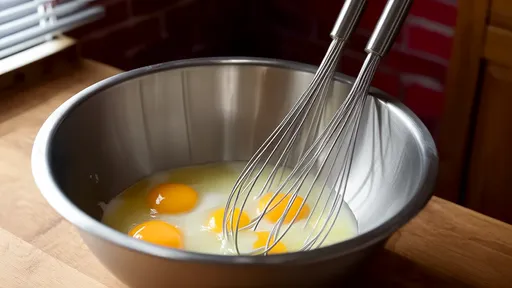
This is where the humble, ubiquitous stainless steel bowl enters the stage, not as a understudy, but as a potential star in its own right. The initial failure many experience with stainless steel is not a fault of the material itself, but a misunderstanding of the other critical factors at play. The primary adversary in the meringue-making process is fat. Even trace amounts of fat, from a seemingly clean plastic bowl, a speck of egg yolk, or on the whisk itself, can catastrophically inhibit the proteins from unfolding and forming the necessary bonds to trap air. Stainless steel’s greatest advantage here is its non-porous, slick surface. Unlike plastic, which can harbor microscopic traces of fat even after washing, or glass, which can have tiny surface scratches, a high-quality stainless steel bowl can be scoured to a truly fat-free state. This provides a perfectly clean slate, a fundamental prerequisite that is often harder to achieve with other materials.
Assuming a impeccably clean bowl and whisk, the real secret to stainless steel success lies in the manipulation of the egg white’s pH. An egg white in its natural state is slightly alkaline. In this state, the proteins unfold easily when whipped, but the bonds they form are somewhat weak and disordered, leading to a less stable foam that is more likely to collapse and release its liquid (a phenomenon known as syneresis). The copper bowl works because the copper-conalbumin complex effectively changes the electrical charge and behavior of the proteins, guiding them to form a stronger network. We can replicate this stabilizing effect in a stainless steel environment by shifting the pH of the whites towards the acidic side.
The addition of an acid is the true game-changer. A small amount of cream of tartar (potassium bitartrate), lemon juice, or even distilled white vinegar works wonders. The acid does several things simultaneously. It lowers the pH, bringing the proteins closer to their isoelectric point, where they are least soluble and most likely to coagulate. This encourages the proteins to denature and coagulate more quickly and uniformly as they are whipped, forming a tighter, more stable network of bubbles. Furthermore, the acid helps to prevent overbeating. It slightly delays the initial foaming, giving you a wider window of time to incorporate air and build a strong structure before the proteins become overworked and begin to collapse. The result is a meringue that is exceptionally white, incredibly fine-grained, and possesses a resilience that rivals, and some argue surpasses, that of a copper-prepared meringue.
Technique, of course, remains paramount. The temperature of your egg whites is a critical variable. Cold eggs separate more cleanly, with the yolk less likely to break, but room temperature whites whip to a much greater volume. The reason is simple: the proteins are more flexible and can unfold more readily at a warmer temperature, allowing them to stretch further around the air bubbles. The best practice is to separate the eggs cold for ease and then allow the whites to sit on the counter for 20 to 30 minutes to take the chill off. The whipping speed is another crucial factor. Starting at a moderate speed helps to build a foundation of small, uniform bubbles. Once the foam is frothy and the acid has been added, increasing the speed to high allows you to rapidly incorporate air and build volume, locking that structure into place.
The final test of stability often comes with the incorporation of sugar. The method and timing of adding sugar are as important as the sugar itself. Adding it too early can weigh down the nascent foam and inhibit volume. The classic French meringue technique involves adding the sugar gradually, only after soft peaks have formed. This allows the sugar to dissolve properly in the moisture of the foam, contributing to a smooth, glossy, and stable final product that doesn’t grit with undissolved sugar grains. For the ultimate in stability, particularly for applications like pavlovas or piped decorations that need to hold their shape for hours, the Italian or Swiss meringue methods, which involve dissolving the sugar in a hot syrup or warming the whites and sugar over a bain-marie, create a partially cooked protein network that is virtually indestructible.
In conclusion, the narrative that a copper bowl is indispensable for perfect meringue is a charming but outdated culinary myth. The stainless steel bowl, when paired with a scrupulously clean environment, the strategic use of acid to manage pH, and a sound technical approach to whipping and sugar incorporation, is more than capable of producing a meringue of extraordinary quality and stability. It democratizes a classic technique, removing barriers of cost and health concerns. The real magic was never in the copper itself, but in the underlying principles of protein chemistry and foam stability that it accidentally addressed. By understanding and consciously applying these principles, any baker can unlock the full potential of the egg white, achieving flawless, soaring results with the most standard piece of kitchen equipment.
By /Aug 20, 2025
By /Aug 20, 2025
By /Aug 20, 2025
By /Aug 20, 2025
By /Aug 20, 2025
By /Aug 20, 2025
By /Aug 20, 2025
By /Aug 20, 2025
By /Aug 20, 2025
By /Aug 20, 2025
By /Aug 20, 2025
By /Aug 20, 2025
By /Aug 20, 2025
By /Aug 20, 2025
By /Aug 20, 2025
By /Aug 20, 2025
By /Aug 20, 2025
By /Aug 20, 2025
By /Aug 20, 2025
By /Aug 20, 2025